
Author: Maëlle Goret
When it comes to democratic inclusion, the mechanics of how people vote are just as important as the legal right itself. For decades, Czech citizens living abroad faced a daunting barrier during national elections: the requirement to vote in person at an embassy or consulate.
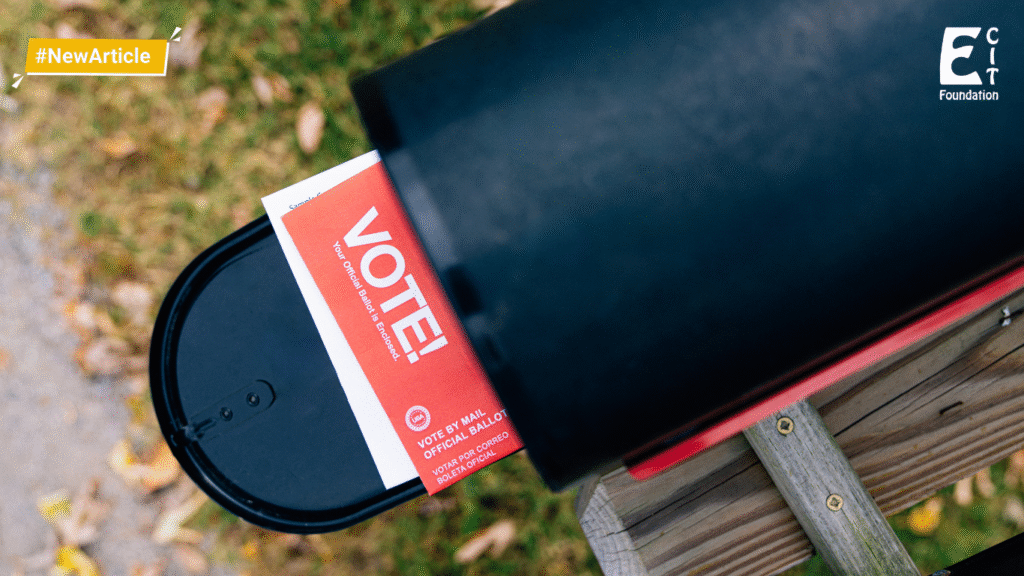
That changed with the passage of a major electoral reform (Act No. 268/2024 Coll.), which allowed Czech mobile citizens to cast their ballots by mail for the first time during the October 2025 general elections.
The data from this first-ever postal voting trial offers a powerful lesson for the rest of Europe: when you give citizens an accessible way to vote, they use it.
The Reality of Bureaucratic Barriers
Before the 2025 reform, exercising the right to vote from abroad was a logistical nightmare. Czech expats had to travel (sometimes across entire continents or oceans) to reach a designated diplomatic mission. On top of the travel time and financial cost, they had to register on a special voters’ list at least 40 days in advance.
While these practical hurdles significantly suppressed turnout for national elections, they pale in comparison to the absolute disenfranchisement mobile Czechs still face in European Parliament (EP) elections. Under current EP rules, Czech citizens living outside their home country cannot vote from abroad at all—they must physically travel back to Czechia to cast a ballot.
Proof in the Numbers: The 2025 Turnout
Opponents of the 2024 postal voting bill spent nearly 100 hours debating it in the lower house, arguing that mail-in ballots were vulnerable to manipulation or that expats didn’t care enough about domestic politics to justify the change.
The October 2025 election results thoroughly debunked those doubts. Diplomatic missions recorded a record-breaking turnout from abroad, with 27,945 valid votes cast across 108 embassies and consulates.
- Immediate Adoption: Out of those record numbers, 8,978 citizens took advantage of the brand-new postal voting option, proving the deep demand for flexible voting methods.
- Rapid Engagement: In the first month of registration alone, thousands of expats signed up, defying conservative ministry estimates that had downplayed how many citizens would actually participate.
However, the reform isn’t perfect. As the legislation stands, postal voting is strictly reserved for Czech citizens who permanently reside abroad; it still does not accommodate citizens who happen to be traveling or on vacation during an election cycle.
Digital Campaigns and Regional Momentum
Recognizing the massive potential of this newly enfranchised electorate, political parties have adapted. The Czech Pirate Party launched the Elections Without Borders initiative to actively guide expats through the new registration rules, heavily utilizing public digital debates and social networks to bridge the geographic gap.
This forward-thinking shift is catching on regionally. Slovakia is currently moving forward with its own legislative amendments to expand and streamline voting from abroad by the end of 2026.
The Takeaway for European Democracy
Czechia’s 2025 postal vote reform proves that democratic structures can successfully adapt to modern human mobility. It has shown that mobile citizens remain deeply connected to, and affected by, the politics of their home countries.
Yet, the glaring contradiction remains: a Czech citizen living in Brussels can now easily mail their ballot back to Prague to choose their national MPs, but they remain locked out of choosing the very MEPs representing them in the European Parliament.
Enfranchisement cannot be piecemeal. If Member States like Czechia and Slovakia can modernize voting infrastructure for national parliamentary and presidential elections, there is no logistical excuse for leaving mobile citizens behind in European elections. True democratic legitimacy across the EU requires a total rejection of disenfranchisement at every level of the ballot.